
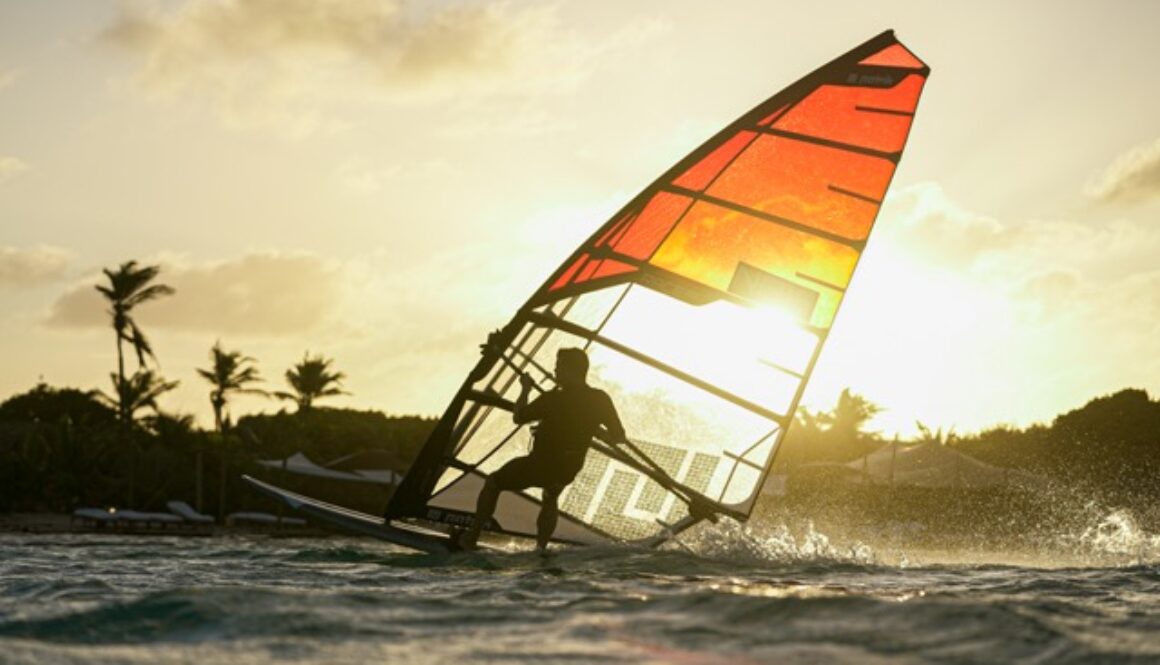
When to Visit Bonaire for Windsurfing
The difference between a good windsurfing trip and a memorable one often comes down to timing. If you are asking when to visit Bonaire for windsurfing, the answer is pleasantly simple: Bonaire offers reliable conditions for much of the year, but the best time depends on the kind of experience you want once you step off the board.
For some travelers, that means chasing the most consistent trade winds possible. For others, it means pairing daily sessions on the water with a quieter, more restorative island stay – the kind of trip where mornings begin in soft light over the bay and afternoons end with dinner by the beach. Bonaire is rare in that it can do both.
When to visit Bonaire for windsurfing
In general, the most popular months for windsurfing in Bonaire run from roughly December through August. During this long stretch, steady trade winds and warm, shallow water create conditions that appeal to everyone from first-timers to highly experienced riders. If your priority is dependable wind, spring and early summer often stand out.
That said, there is no single perfect month for every traveler. Bonaire is not a destination with one short, make-or-break season. It is better understood in rhythms. Some months feel a bit busier, some a bit calmer. Some bring stronger, more consistent wind, while others may offer a slightly softer pattern that suits relaxed progression and a more unhurried island atmosphere.
The best months for the strongest consistency
If you want the highest confidence of windy days, many visitors favor January through July. Within that window, February, March, April, May, and June are especially appealing for travelers who want to maximize time on the water.
These months tend to bring a reliable trade-wind pattern, which is one of the reasons Bonaire has become such a beloved destination for windsurfing. Conditions are often warm, bright, and inviting, with water that stays comfortable enough to keep the focus on the experience rather than the elements. You are not layering up, watching forecasts with anxiety, or wondering if the day will turn. More often, you settle into a steady routine: breakfast, wind, turquoise water, and a long, golden afternoon.
For intermediate and advanced windsurfers, this period often feels ideal. There is enough consistency to plan a trip with real confidence, and enough beauty in the setting to make every session feel like part sport, part escape.
What if you are a beginner?
Beginners often assume they need the windiest month possible, but that is not always true. Learning is easier when conditions feel manageable, and Bonaire is especially well suited to that balance because of its shallow, sheltered waters.
If you are newer to the sport, late winter through early summer still works beautifully, but your ideal trip may be less about finding the absolute strongest wind and more about finding time to practice without pressure. A week in a consistently breezy period is usually better than waiting for a supposedly perfect month and building expectations around every forecast.
The beauty of Bonaire is that the setting itself supports progression. Warm weather, clear water, and a relaxed pace make it easier to spend more time on the board and less time recovering from the environment. For many travelers, confidence builds faster when the destination feels welcoming rather than extreme.
Bonaire by season: what to expect
Winter and early spring
From December through April, Bonaire feels particularly attractive to travelers escaping colder climates. The island is warm, sunny, and energizing without feeling hectic. Winds are typically dependable, and the overall atmosphere can be lively, especially around holiday travel and peak winter vacation periods.
This is an excellent time to visit if you want windsurfing to be the centerpiece of the trip while still enjoying a polished Caribbean getaway. The trade-off is simple: these months are also popular. If you prefer a more social island mood, that can be part of the appeal. If you prefer maximum quiet, you may want to look slightly outside the busiest holiday windows.
Late spring and summer
Late spring into summer is often considered one of the sweetest spots. Winds remain favorable, the water is warm, and the island settles into an easy, sunlit rhythm that feels both active and unforced.
For many travelers, this is the answer to when to visit Bonaire for windsurfing if they want the best blend of sport and relaxation. You can spend meaningful time on the water, then shift effortlessly into the softer pleasures of the island – a peaceful suite, a slow lunch, a massage, a sunset drink, or a quiet evening with the sound of the bay nearby.
Early fall
September and October can be a little less predictable for wind than the core trade-wind months, though Bonaire still offers favorable weather compared with many other destinations. For travelers who care most about prime windsurfing conditions, these months may feel less certain.
Still, there is a different kind of appeal here. The island can feel calmer, more spacious, and deeply restorative. If windsurfing is one part of a broader luxury escape rather than the only focus, early fall may suit you very well.
Late fall
By November, many travelers begin looking ahead to the return of stronger seasonal reliability. It can be a lovely time to visit, especially if you want warmth, beauty, and a quieter sense of anticipation before the busier winter stretch begins.
Wind matters, but so does the kind of trip you want
Choosing when to visit Bonaire for windsurfing is not only about meteorology. It is also about mood.
If you are planning a trip built around daily sessions, gear, and progression, then aiming for the most consistently windy months makes sense. You will likely feel happiest sometime between late winter and summer, when the trade-wind pattern is typically most dependable.
If you are traveling as a couple, blending activity with romance and comfort, your ideal timing may be a little different. You may still want excellent wind, but you may also care about the overall feel of the island, the pace of your days, and how much room there is to alternate between motion and stillness.
That is where Bonaire truly distinguishes itself. A windsurfing trip here does not have to feel narrow or technical. It can feel refined. You can spend the morning on the water and the rest of the day enjoying the kind of island experience that makes you want to stay longer than planned.
Practical timing tips before you book
If your main goal is windsurfing, plan around a broader seasonal window rather than obsessing over one exact week. Bonaire is known for consistency, but wind is still wind. A five- to seven-night stay often gives you a better chance of enjoying several strong days than trying to time a very short trip too precisely.
It is also worth thinking about your personal energy. Some travelers want a trip that feels active from sunrise to sunset. Others want one good session a day and plenty of time to relax afterward. There is no wrong answer, but knowing your pace will help you choose the right month and length of stay.
If you are traveling with a partner or family members who are not windsurfing every hour, timing becomes even more personal. In that case, the best season may be the one that gives everyone something to look forward to – not only wind, but warmth, comfort, good dining, calm water, and the easy beauty of the island itself.
For travelers who want both polished comfort and direct access to one of Bonaire’s most loved windsurfing settings, Sorobon Bay Hotel offers a natural way to experience that balance. The appeal is not only what happens on the water. It is how effortlessly the day flows around it.
A well-timed Bonaire trip has a particular feeling to it. The breeze arrives, the bay glows, and your days find their own elegant rhythm. If that is the experience you are after, late winter through summer is the clearest place to begin.